How to go viral on TikTok, from 1,332 posts that did.
Most advice on how to go viral on TikTok is a guess. We studied 1,332 TikTok slideshows that went viral, most of them from accounts that usually got a few thousand views, and measured what they had in common. Then we turned it into a playbook.
Posting for an app? Type it and get three post ideas built on formats that already went viral. Free, no sign-up, about 20 seconds.
Updated 26 October 2026
How to go viral on TikTok, in short.
Start from a format that has already gone viral, open with a hook of a few words that people can read before they scroll, keep the text on every slide short, and post every day so the account gets many tries. In the 1,332 viral posts we studied, account size mattered less than most people think: accounts that usually got under 1,000 views had hits with a median of 3.4 million views, against 5.9 million for accounts that usually got over 100,000.
There is no trick that makes one post go viral on demand. What you control is how many good tries you take, and how close each one is to what already worked.
A small account didn't cap the hit.
We grouped the posts by their account's usual views: the median of its recent posts. From the smallest group to the biggest, the usual post grows about 300 times. The viral post grows less than two times.
Show the numbers as a table
| Account's usual views | Posts | Median usual | Median viral post |
|---|---|---|---|
| Under 1,000 | 189 | 709 | 3.4M |
| 1,000 to 5,000 | 487 | 1,955 | 3.0M |
| 5,000 to 10,000 | 180 | 7,351 | 3.2M |
| 10,000 to 50,000 | 298 | 19,125 | 4.1M |
| 50,000 to 100,000 | 65 | 72,800 | 4.2M |
| 100,000 or more | 100 | 219,250 | 5.9M |
Going viral without many followers is common, not a fluke. TikTok recommends a post on how people respond to it, so a post from a small account can travel about as far as one from a big account. The profile sets the floor of a normal day, not the ceiling of a good one.
Big accounts still have an edge, just a smaller one than you'd guess. Their hits were a bit bigger, and a normal post starts with a larger audience. If you're starting from zero, the gap you close by posting more often is bigger than the gap you close by waiting to grow.
Four hits from accounts that usually got about 1,000 views. Tap one to swipe through it.
Viral is a jump, not a slope.
Each post's views divided by its account's usual views. Almost none of the 1,332 was a modest step up from a normal day.
The middle half of the posts. The typical hit was several hundred times a normal day.
did more than 1,000 times their account's usual views.
did less than 10 times. Doubling your usual is a good day, not a breakout.
So don't spend a week polishing one post. If your views creep from 800 to 1,200, the account is healthy, but a breakout looks different: one post at 50 or 500 times the rest, usually without warning. The more good posts you put out, the more chances you give that to happen. To spot it, read every post against your account's usual instead of against other people's numbers.
What the biggest hits had that smaller hits didn't.
We compared the top 10% (13.7 million views or more, 133 posts) with the bottom quarter (250,600 to 1.7 million, 333 posts). All of them went viral, so this is big hits against smaller ones.
Show the numbers as a table
| Median | Top 10% | Bottom quarter |
|---|---|---|
| Words in the hook | 6 | 9 |
| Words per slide | 7.7 | 16.1 |
| Words in the whole post | 59 | 128 |
| Liked by | 10.5% | 9.9% |
| Saved by | 1.8% | 4.8% |
| Shared by | 0.46% | 0.58% |
| Slides | 8 | 7 |
Half the words
The biggest hits had shorter hooks and about half as much text, on every slide and in total. A post that reads in a second per slide gets swiped to the end by more people.
The same like rate
About one viewer in ten liked a post in both groups. Likes come with any hit; they don't tell a big one from a small one.
Fewer saves
Big hits were saved less than half as often per view. Stories, photo dumps and relatable posts were the most common types in the top 10%; guides and tips lists filled the bottom quarter. Reach and saves pull in different directions.
A viral post, per 1,000 views
- 105likes
- 35saves
- 5shares
- 0.3comments
Medians across the library. Use them as a rough yardstick for your own posts: comments are rare even on hits, so a quiet comment section says little.
One caution for this whole page: we only see posts that went viral. These are patterns among hits, not proof of what causes one. Plenty of short hooks flop too.
How to go viral on TikTok: the playbook.
Six habits built on the numbers above. None of them guarantees a viral post. Together they give you more tries, and better ones.
Start from a format that already went viralRemake it. Don't repost it.
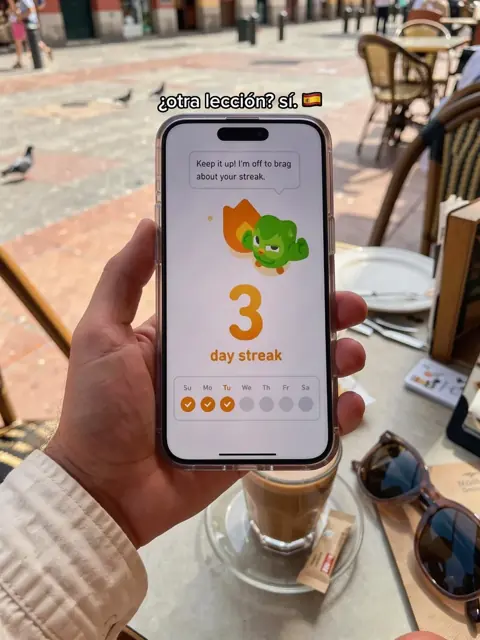
A format is the skeleton of a post: the hook, the number of slides, what each slide does and how the text looks. Keep that and tell your own story. The original below got 31.1 million views on an account whose usual post got about 2,100, roughly 14,700 times its usual.
Same mocking question over bleak rooms, then a flip on slide five to a café in Spain, and the app's streak on the last slide. Find formats in our library of slideshow ideas or start from a slideshow template.
Remake made by ClonBot to show what it does. We're not affiliated with Duolingo.
Make the hook a few words longReadable before the thumb moves.
Short hooks were overrepresented among the biggest hits. One in five posts with a one-to-three-word hook landed in the top 10%, against one in sixteen with ten to thirteen words.
- 1–3 words21%
- 4–6 words11%
- 7–9 words8%
- 10–13 words6%
- 14+ words9%
- Share of posts in the top 10% of views. The line marks 10%, what you'd expect by chance.
Questions did well too: the 62 hooks with a question mark had a median of 5.0 million views, against 3.5 million for the rest. More in our guide to TikTok hooks.
Cut the text on every slideAbout eight words, one idea.
The biggest hits had a median of eight words per slide; the smaller ones had sixteen. If a slide needs a paragraph, split it into two slides or move the detail to the caption. Big readable text on a real photo beats a dense card. Our guide on how to make a slideshow on TikTok covers sizes and text.
Choose reach or saves before you writeOne post rarely gets both.
Stories, relatable posts and photo dumps went furthest. Guides and checklists went less far but were kept: hooks that started with "how to" or "how I" had a median of 2.6 million views, below the 3.6 million for all posts, but 4.4% of viewers saved them. Plan a week with both kinds: reach finds new people, saves give them a reason to follow.
Post every day, for weeksTiming matters less than showing up.
No posting day or month stood out in a way that held. In 2025 the busiest months for hits were July and August; in 2024 it was December. Hits came on every weekday. What these accounts had in common was a steady stream of posts, so each new one was another chance. Two posts a day is a good pace once the account is warmed up, and slideshow automation keeps it going on busy weeks.
Judge each post against your usual, then remake the winnerMake more of what beats it.
Take the median views of your recent posts as your usual. A post at three times that is a signal; at ten times, a breakout. Remake a winning format with a new story, new photos and a new place. Don't repost the same slides, and don't delete posts that underperform: they still teach you something.
This is also how you grow on TikTok after a hit: one viral post brings visitors, and a profile full of posts in the same format and voice gives them a reason to follow.
If you're posting for an app
Put the app inside the story as one slide, the way the language app shows up as the streak at the end, not as an ad on top. ClonBot does this for you: it starts from those 1,332 viral formats, writes a new story for your app with one consistent creator and your real app screens, builds posts every night, and posts the ones you approve. Its Results page compares every post with your account's usual. See TikTok slideshows for apps or pricing, from $99 a month for 60 posts.


Questions about going viral.
What is the trick to going viral on TikTok?
There isn't a single trick. In the 1,332 viral slideshows we studied, the biggest hits had short hooks (a median of six words), about eight words per slide, and a format that was easy to follow from the first slide. The accounts behind them posted often. Start from a format that already worked and give yourself many tries.
How do you get 1,000 views on TikTok?
1,000 views is about what the smallest accounts in our set got on a normal day: one in ten of them usually got under 834 views per post. To get there, post every day in one niche, put a short hook on the first slide (or in the first second of a video), keep the text easy to read, and use a sound. Give a new account a couple of weeks before you judge it.
How do you 100% go viral on TikTok?
You can't, and anyone who promises it is selling something. Even the accounts behind these 1,332 hits usually got a few thousand views per post; the hit was the exception among many normal posts. What you can do is raise the odds: proven formats, short hooks, little text and steady posting.
How many views is considered viral on TikTok?
There's no official line. The smallest post in our set of viral slideshows had 250,600 views and 89% passed a million. For your own account, a better test is relative: a post that gets ten times your usual views has broken out, and 98% of the posts we studied did at least that.
Can you go viral on TikTok with no followers?
Yes. TikTok shows posts to people who don't follow you, based on how viewers respond. In our data, posts from accounts that usually got under 1,000 views reached a median of 3.4 million views, not far from the 5.9 million of accounts that usually got over 100,000.
Do hashtags help you go viral on TikTok?
We didn't measure hashtags in this study. A few relevant hashtags help say what a post is about, but they don't replace a strong hook or a format people want to swipe through. Spend your time on the first slide, not on hashtag lists.
How do you grow on TikTok, not just go viral once?
Repeat what worked. When a post beats your usual, make more posts on that format with new stories, keep the same creator and voice, and stay in one niche, so someone who finds you through one hit sees a profile worth following.
Keep reading
More good tries, every single day.
Setting up your app and creator is free. Plans from $99 a month for 60 posts.